Humanity was first warned about sprouts a little over (or under – I hate maths) five hundred earth years ago. The plague seems to have been initially triggered in the Netherlands by some type of Ergonomic interference although sources are unreliable, and probably written in code. The terror arc’d out across the rest of Europe over the centuries, eventually reaching Britain where they made their terrible way onto my plate every Christmas. There they would squat, reeking gently of swamp gas. As I understood it, if these hideous grotesqueries weren’t ingested then a black planet would fill the sky, crops would fail, humanity would tumble into the gutters like autumn leaves and there wouldn’t be any ice-cream ever again. Over time, I managed to negotiate the ritual vegetable consumption down to a single green, eldritch unmentionable. Once the foetid cabbage god had been appeased, I was allowed to leave the table and spend a melodramatic forty-five minutes dry-heaving in the corner.
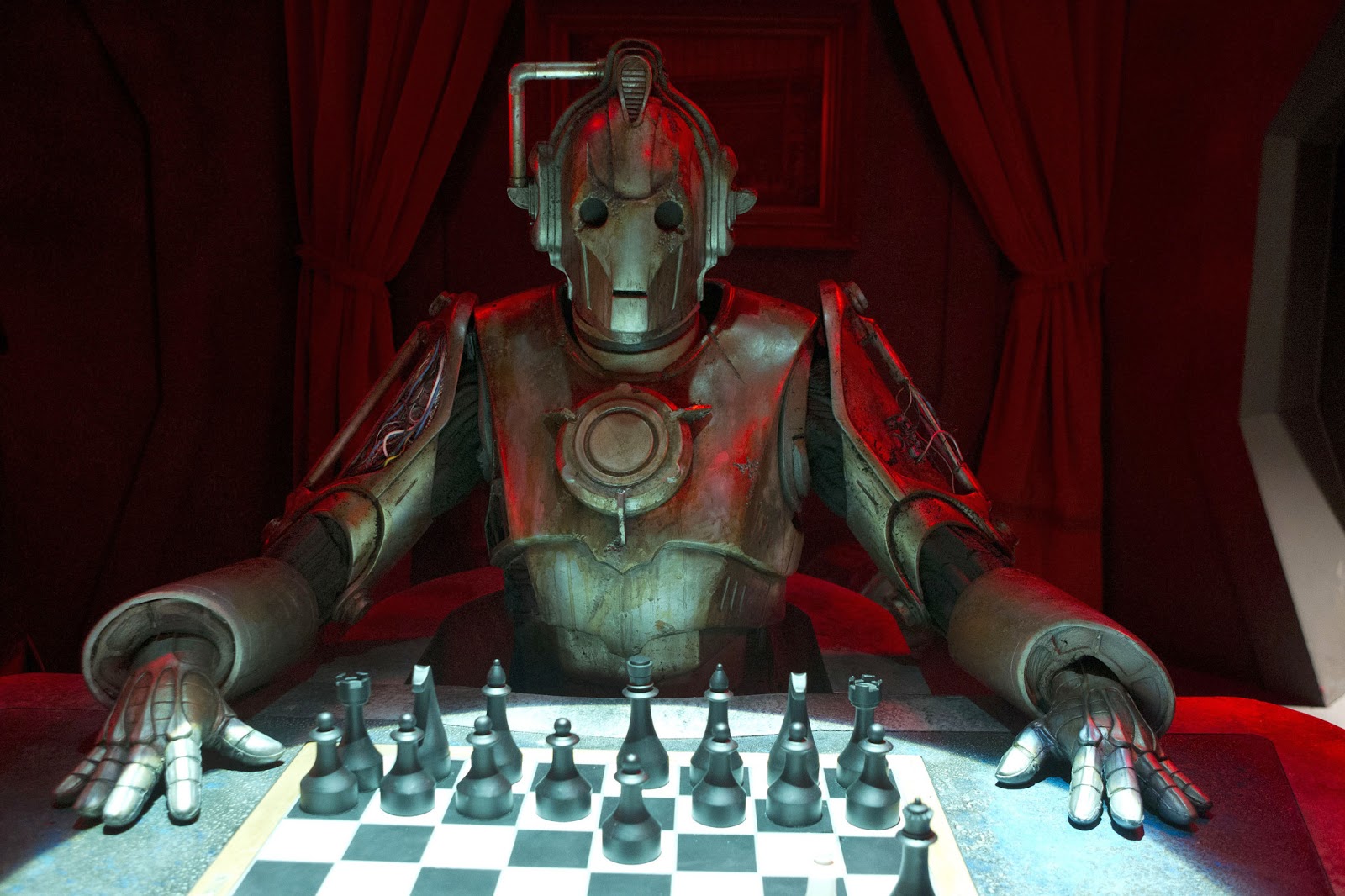
I recently conducted a poll in my head in which Nightmare in Silver came out slightly above The Rings of Akhaten in popularity. Consequently, I approached rewatching the episode with as much trepidation as anyone with an itchy eye but no gloves should approach a ghost pepper - a foodstuff that has an entire Wikipedia subsection devoted to its ‘Use as a Weapon’. These bottom-of-the-chart stories contain an interesting similarity other than both being written by Neils.
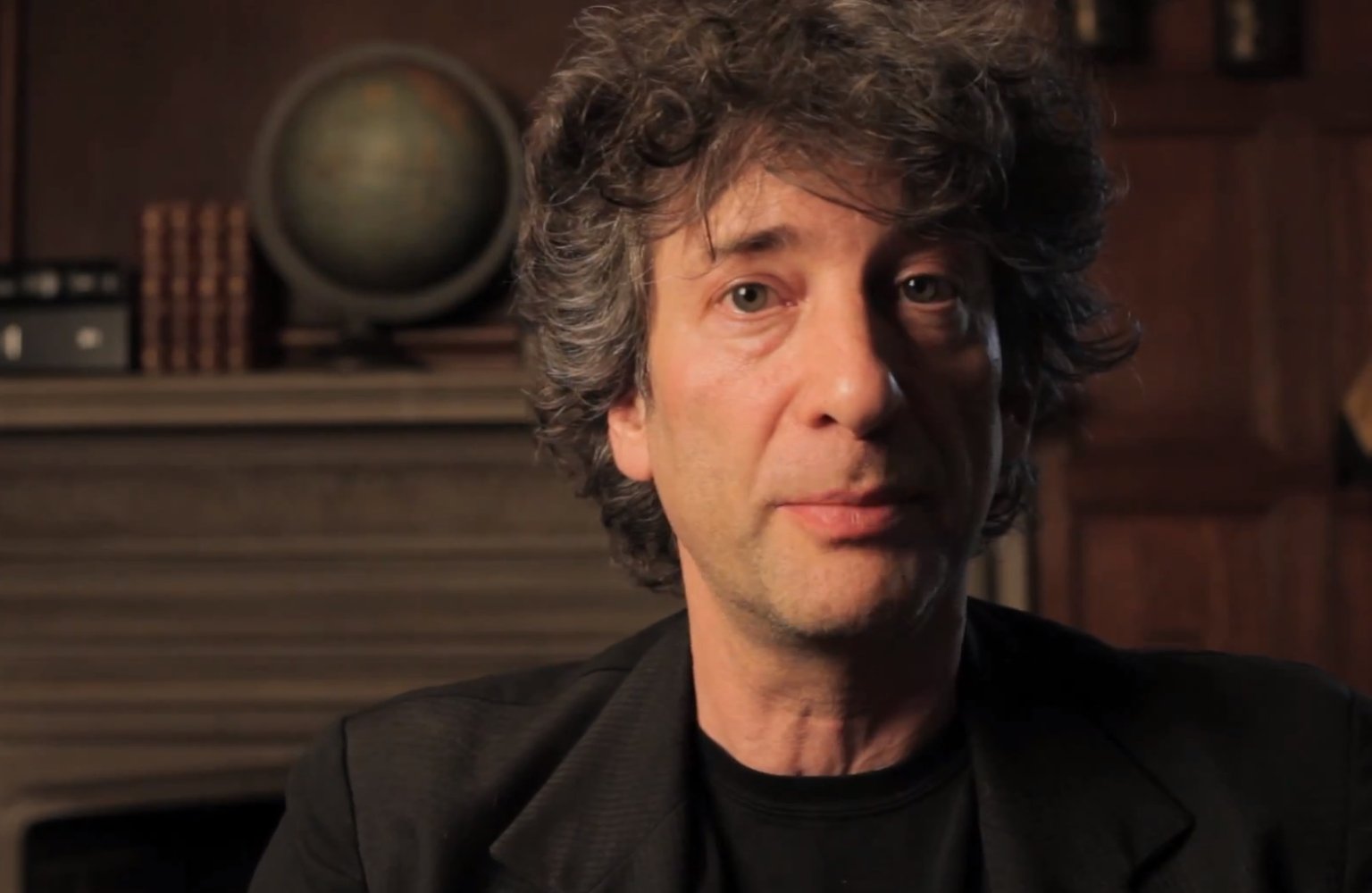
Neil Gaiman and Neil Cross have both made a success of themselves outside of television and although Cross hasn’t made quite the same impact that Gaiman has, they’re both seen as novelists, are very obviously fans of Doctor Who as a series, the writings of H.P. Lovecraft and the comics of Alan Moore. However, at the time of typing, Cross has had more hits in television than Gaiman, acting as lead writer on Spooks and showrunner for Luther amongst others. Cross stated in Doctor Who Magazine’s preview of The Rings of Akhaten that he had made sure the BBC were in no doubt that he was enthusiastic about writing for Doctor Who and eventually managed to land the scripting duties on Hide, which was filmed earlier and shown later. According to Cross, Steven Moffat asked if he’d be interested in writing another script, a really big one this time. At this point I’m going to mention The Power of Kroll, just to make sure that someone has.
The Power of Kroll shares some unexpected commonalities with The Rings of Akhaten, including a production team pushing a writer for the biggest monster ever – an eighth wonder of the world, if you will – and both scripts containing bait-and-switch versions of the Big Bad. (‘Big Bad’ as a euphemism for ‘Monster of the Week/Season’ was first coined, of course, in Buffy the Vampire Slayer, a series that not only influenced the new Doctor Who but also contained an all-musical episode, Once More, with Feeling, which had been a huge critical success.) The monsters in both stories are let down by the effects but there’s nothing wrong with thinking large. Well, I say that, but we haven’t got to the music yet.
The first version of Hide that Cross handed in was apparently more of a small-scale ghost story and turned out to be a lot cheaper than required. It seems that budgets are allocated on a story by story basis now rather than stretched over a whole series like last century. This is speculation because I hate maths. The temptation’s always going to be to fatten up the first stories and let the later ones fend for themselves in prehistoric Heathrow where they fight over the remaining scraps of cash like feral dogs. Because Cross had turned in a script that was seen as too frugal, I guess he’d entered bean-counter territory, where if you can make an episode for fifty magic beans then you only need fifty magic beans to make an episode. Conversely, if you’re trying to make a really big story then it’s probably not a good idea to spend more magic beans on minstrels than usual just because there seem to be a lot of unused costumes in the dressing-up box.
Writers love words: words build reality. Producers also love words: words use up fewer magic beans per hour than recording studios. Douglas Adams said a very sensible thing about comedy in Doctor Who, along the lines of just because the script’s funny that doesn’t mean anyone should play it less than straight, which also applies to pop-culture references. In a recent interview Cross mentioned his love of anti-heroes, specifically Han Solo, though he obviously also likes Harrison Ford’s other work. The Rings of Akhaten sneaks in two references to Blade Runner and, cleverly, one reference covering two Indiana Jones films. The magic beans swapped for the speeder bike reference might have been better put toward bigger green curtains for Matt Smith and Jenna Coleman to shout at.
Neil Cross and Matt Smith both come out of The Rings of Akhaten with their dignity nearly intact. Let’s look at the good things in the episode next; we’ll come back to the music when the rest of the plate’s clear. The whole pre-title sequence moves at a thunderous pace. Although the guest acting felt a bit clunky on first viewing it’s really emotional shorthand, relentlessly propelling the story forward. (Also, being-attacked-by-inanimate-object acting must be a challenge in the wake of Leslie Nielson’s Lieutenant-Frank-Drebbin-versus-Towel masterclass.) I can remember reading Doctor Manhattan’s beautiful speech at the end of Watchmen’s ninth issue back in 1987. It’s not impossible that I might even have bought my copy in the same Bristol comic shop that Neil Cross got his from. Smith and Coleman are really good throughout, the aliens do what they need to do, the Vigil (cousins of the Cenobites, perhaps?) are genuinely creepy when they first appear and young Emilia Jones carries off a difficult role nicely. Nobody mention The Snowman.
Production-wise that about wraps up the good things but before we get to the music let’s look at the script. Cross really tries some gutsy stuff here. It takes a certain amount of bravery to bring elements of The Golden Bough, Sir James George Frazer’s seminal history of mythology and religion, to a mainstream BBC1 Saturday audience. Alright, it’s via The Wicker Man, but Cross is mining the same sources for a slightly different result. This isn’t how the original religion survived; this is how it’s become absorbed and changed; the Queen of Years isn’t called ‘Merry’ by accident. In a lovely moment, Cross has the Doctor acknowledge that whatever your stance, it’s still a nice story. On top of this, Cross admitted he was very purposefully referencing the works of Lovecraft and basically wanted the Doctor to be arguing with Grandfather Cthulhu at the climax.
On my reluctant rewatch, I was surprised to find that things actually move along quite nicely up until Clara encourages Merry to forget her performance anxieties and sing, sing, sing. As Merry skips off to rejoin her scarlet-robed minders the soundtrack suddenly seems to break out into a version of Raindrops Keep Falling on my Head. Up until that moment the music’s fine. The episode starts with the Specials’ Ghost Town, which is a marvellous song and nicely symptomatic of what’s going wrong here.
When it began, Doctor Who sounded like nothing on Earth: Delia Derbyshire’s groundbreaking reimagining of Ron Grainer’s theme was as unsettling and otherworldly as anything Erich Zann strangled out of his violin. The first decades of the show used experimental pieces and composers: Tristram Cary was a pioneer of musique concrete and provided some immensely effective and alternative music for the show, saloon ballads notwithstanding; Carey Blyton made startling use of crumhorns; Malcolm Clarke made valves scream while Geoffrey Burgon scored the Douglas Camfield stories that the otherwise ubiquitous Dudley Simpson… didn’t… work on. Doctor Who’s early musical pioneers deserve a decent examination, if just to see why their work has dated more favourably – perhaps - than the composers who filled in after the final season of Simpsons ceased broadcasting.
Murray Gold was invited aboard Doctor Who by Russell T. Davies. The two had crewed together on both series of Queer as Folk, The Second Coming and later Casanova, so this was to be expected. Gold’s early work on Doctor Who really shows him grow in confidence and range as a composer very fast, though, having said that, he should really have disembarked with the rest of the Tenth Doctor’s team and made room for someone fresh. Since Steven Moffat took the helm, the music has become closer to a series of stock phrases than specifically commissioned new works. The afore-mentioned Ghost Town by the Specials, is actually a piece of social commentary that just happens to also sound a bit spooky.
It’s hard to see how any composer could maintain a consistent level of high creativity over an eight-year period and, perhaps, we’ve entered the age where the music is largely being written with a focus more on the CD or eventual Prom. There really should be a better reason for playing the Dream Lord’s theme throughout The Name of the Doctor’s prologue, Clarence and the Whispermen other than just because it’s creepy. It feels sometimes that the music acts as an audio description of the action rather than adding any complimentary timbre to it.
The Rings of Akhaten script deals with huge themes including responsibility, religion, society and individuality. An entire culture is attempting to placate a destructive force so massive that if unleashed it could destroy them utterly before heading off into eternity to feast on billions and billions of worlds. Unfortunately, the ‘lullaby’ that never ends turns out to be the hymn from Gridlock fed through a West Ended Lloyd-Webbernator. Although it understands the theory, this doesn’t carry any real emotional depth. I hate maths almost as much as I hate sprouts.
And that’s the nub of the issue: the accursed sprout. The fact that I don’t like them doesn’t mean that you won’t, and nor should it. You might like nothing more than a starter of sprout, followed by a main course of sprout curry, finishing with a dessert of sprout sorbet. Someone must. If I offer any suggestions here as to how the music could be done better then all they’ll do is expose my own, unique, preferences. Just because they work for me, doesn’t mean they will for you. I’m giving ground here, but only on the understanding that every element within a programme should be working toward telling the story.
In The Rings of Akhaten, the story is pushed apart in the middle to bunch up at either end. This is to allow the music to take centre stage. Judging by the special effects, a lot of magic beans went into making this music sound… expensive. Matt Smith is forced to deliver a speech that still required furious pruning to a wall, crying on cue to give the music a push it doesn’t earn. That was never going to work. It’s the wrong way round for a start. As the old adages states, if you notice it, then it’s not working. Doctor Who fans will often forgive these moments in stories aired in a year beginning with 19. To try and find something positive to conclude with, I’ll mention here that at least the Doctor’s speech doesn’t end with the words ‘big’ or ‘boy’.
Maybe Murray Gold will pull something superlative out of the sky from now on. Perhaps all the real creative energy has been building toward The Day of the Doctor. I really do hope that’s the case. It’s always hard to walk away from something you love doing. But, even so…
Don’t you think he sounds tired?
Aled Williams is shorter than before but still Welsh. His blog only appears to be about Doctor Who: www.andtheresbloodonit.blogspot.co.uk
All opinion pieces and reviews published on this website are the personal opinions of the author and do not necissarily represent the views of this website as a whole.
Any articles based on rumours will come from a variety of sources and may be true, true in part or completely false, they should not be repeated as fact nor taken as anything other than the rumours they are until there is confirmation from official sources.