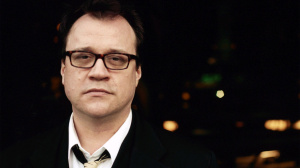
When the early history of Doctor Who is so often retold, there are legendary names thrown into the mix, from Sydney Newman and Waris Hussain to William Hartnell and Terry Nation, from Anthony Coburn to Christopher Barry, and rightly so. But one name that often escapes much attention is Richard Martin, co-director of the first ever Dalek serial alongside other key stories throughout the Hartnell era.
Richard Martin’s Doctor Who work spanned three of the most important years in the show’s history - covering the first two seasons broadcast between 1963 and 1965 and lending his directing skills to the likes of The Daleks, The Edge of Destruction, The Dalek Invasion of Earth, The Web Planet and The Chase. In total Martin directed an impressive 22 episodes, each one a story of note in these formative days as he became the “go to” director for working with Doctor Who‘s most popular villain, the Daleks.
Formerly an actor, appearing in the classic Ivanhoe, Martin had risen through the theatre, to television and eventually production. He was trained alongside Bill Hayes and The Keys of Marinus‘ John Gorrie by the BBC Drama Department with a stated desire to work in fantasy or tackle modern literature, by his own admission the Beeb had no idea what to do with him! Yet the hallowed halls of television centre were changing quickly in an attempt to keep pace with commercial television, the BBC going as far as to bring in Sydney Newman as the new Head of Drama, Newman immediately setting about shaking up the dusty establishment. Richard Martin had already sat in on a development meeting for Doctor Who in the company of Rex Tucker, acting as caretaker Producer prior to Verity Lambert’s appointment, and it was Tucker who asked Martin to be a part of the new show. Speaking to the BBC, Martin recalled the meeting:
“‘I was seconded to a strange meeting! They had these strange meetings… I didn’t know what I was going for! Rex Tucker said, Come along, Richard! There’s a new children’s drama being mooted… So, we all sat round the table…”
Joining the inexperienced team, Martin was given co-director duties on the show’s second serial The Daleks despite only having credits on Compact and Suspense to his name. Yet he wasn’t quite trusted to take the reigns entirely, as he told Doctor Who Magazine‘s Peter Griffiths in 1995:
“Chris [Barry] started them off. I trailed him on the first three episodes - the BBC didn’t trust me, quite rightly, so I sat and watched him direct. He didn’t like the idea very much and wanted to get off it. He had a classic serial to do, which he did beautifully, and obviously as a director he was more interested in that than a bunch of metal objects at Lime Grove. So I took over from him. He said to me later he would’ve stayed if he’d known how popular it was going to be!”
Martin was somewhat dismissive of Terry Nation as merely an ideas man, leaving others to expand upon his scripts and credits Ray Cusick with the entire look for the Daleks. It was also Martin who alongside Brian Hodgson of the BBC Radiophonic Workshop came up with the distinctive voice for Skaro’s finest, Martin sitting in on the sessions where the voice was created. Never one afraid to speak his mind, Martin clashed with Producer Verity Lambert over how far the serial could go amongst a wider issue with Lambert, admitting that he “wasn’t very nice to her” and that he got the same treatment in return:
“Verity [was] a Svengali. She [liked] to pull strings and make everyone jump to her tune. She [was] very bright, but she was learning her trade then. We were both learning. She learnt how to handle temperamental directors and I learnt how to handle ambitious and clever producers. We were bound to rub each other the wrong way. I broke my little finger thumping the desk, telling her to get lost one time. She came right back. She got me in a corner and said, ‘You’re quite right to object to my interference at that moment, and in future I’m not going to sit behind you, I’m going to have a separate room with a feed. But I had a perfect right to say what I did.’ I said, ‘I’ll buy that,’ sucking my bruised finger. Tempers go very high on those occasions because time is of the essence. While I was sweating to get the programme done, she’s stopped the recording because she objected to a hat.”
Martin would be retained for the first episode of the next serial The Edge of Destruction, before taking an eight month hiatus from the series to direct two thrillers for the BBC, being asked back during Season 2 to once again direct the Daleks in their second story - The Dalek Invasion of Earth.
The BBC gave The Dalek Invasion of Earth high praise during the promotion for 2013’s An Adventure in Space and Time, describing the serial as, ” a wonderful piece directed with style, creativity and confidence,” highlighting stand out scenes including “Barbara’s flight through a desolate London, an encounter with two traitorous hags who sell out to the Daleks, and the Doctor’s famous farewell to Susan at the close of the story”. Yet the serial was once again slightly troubled, with Martin making an enemy for life of Dalek operator Robert Jewell after the Westminster Bridge scene where Martin had wheels affixed to the Dalek casings in order to speed up proceedings, a decision Jewell later described as “the worst thing in the world… it was lousy, terrible”.
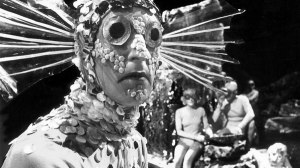
After the success of his first three serials, Martin must have had high hopes for his fourth, The Web Planet… until he read the script, which he described as “appalling” and “atrocious” despite having “massive potential”. Martin believed that the script was so bad that he went as far as altering it himself, rewriting much of Bill Strutton’s original dialogue. It was an action that received terse words from Verity Lambert who demanded Richard inform her if he intended to change anything in future. Martin’s stance was uncompromising:
“She didn’t know a good line from a bad when she started!”
Martin recognised the failures of the serial and his own direction however, citing budget, lack of time and his own inexperience as reasons for the serial being considered one of the lower points of Doctor Who‘s second season. Despite it’s perceived failings however, The Web Planet gained something of a cult following in recent years with the Zarbi and Menoptera being seen as something quintessentially Hartnell, appearing in several comics, a Big Finish audio and An Adventure in Space and Time, not to mention Peter Capaldi mentioning that the serial “lived powerfully and expansively in my head for decades”.
Martin would continue to alter scripts on the series during his final stint on the show, directing the third Dalek serial, The Chase. According to Martin, Terry Nation wasn’t worried that he changed the script “all over the place” and considers the serial something of another let down through budget limitations and Nation’s plotting, suggesting the writer would have been more suited to writing comic books than TV or film! It was during The Chase however than Martin cast Peter Purves as a replacement for the departing William Russell and Jacqueline Hill, Purves crediting the director with kickstarting his career, saying in 2009:
“Richard Martin, who gave me the part in Doctor Who that really set me going – he said some wonderfully complimentary things about my acting.”
After the perceived failures of the budget eating Web Planet Martin acknowledged he was “in big trouble” with the BBC and wasn’t invited back to the series. In later years he would work on Sir Arthur Conan Doyle (1967), the acclaimed Elizabeth R (1971), A Family at War (1971), Adam Smith (1972), The Mallens (1979) and All Creatures Great and Small (1990) alongside appearances for the Doctor Who DVD range.
Summing up his time on the show in his 1995 DWM interview, Martin said:
“Doctor Who is not something I have any affection for. I felt disappointed in it, I was still learning an awful lot, and learning by my mistakes. I’m sure I made a lot of them, including rubbing Verity up the wrong way, because Verity became a very important person…It was a very courageous move at the time, an attempt to do something modern which had broad appeal. It could have been wonderful with whole-hearted commitment and a producer who understood right from it’s inception the potential of science fiction/fantasy. I wasn’t happy with what we were doing. It was fun, but it was trivia.”
Richard Martin retired many years ago, yet made several appearances during Doctor Who‘s 50th anniversary last year. He currently lives in France.
This article is the third in our “Story by Story” series running all this week celebrating The Daleks. DWW welcomes all submissions and pitches on the theme throughout the week at [email protected] +
In future weeks we shall be celebrating Inside the Spaceship (Nov 3 – 9), Marco Polo (Nov 10 – 16), The Keys of Marinus (Nov 17 – 23), The Aztecs (Nov 24 – 30), The Sensorites (Dec 1 – 7) and The Reign of Terror (Dec 8 – 14).


Latest News