


Taking our que from the DWM interview that allowed Patrick Troughton to sit comfortably alongside Matt Smith, using archive material from Pat to recreate an encounter, today we present the original TARDIS team of William Hartnell, William Russell, Jacqueline Hill and Carole Ann Ford. Using archive material and rare quotes from William Hartnell we present the beginnings of this wonderful adventure in space and time. Some quotes have been merged or edited for tense only, all text is otherwise accurate.
We feel it is an opportune moment to pay our respects to the entire original cast but in particular those no longer with us, both Jacqueline Hill and William Hartnell, a man who adored Doctor Who. We humbly dedicate this article to their memory.
With this 50th anniversary month now well underway, fans and the television industry alike are looking back to the very beginnings of the show, but how was it our pioneering cast came to join the show in the first place?
 William Russell: “I was contacted by Verity [Lambert] who said she wanted to meet to discuss a part in a new serial she was doing. I went along to talk to her about it and got myself into a lengthy discussion about the series, what it was about, what my character was supposed to be doing in the whole set-up and roughly what the other details about it were – how long the engagement would be, etc. Eventually, all was agreed and I signed my contract, which was interesting as the BBC had an escape clause whereby had the series been a flop they could have dropped us at any time, whereas we were bound to keep to our side of the bargain. I have to admit that none of us thought that Doctor Who would be around for a very long time, except Billy, who had the kind of confidence in the project that the star needs to have.”
Jacqueline Hill: “I was at a party one evening and the usual bunch of friends were there. I’d known Verity Lambert socially since she had joined the ABC television company for whom both my husband and myself had done some work. She was one of Sydney Newman’s proteges, and by this stage she had transferred with him to the BBC, where she had been asked to become a producer. Anyway, this party came at just the right point for me, because Verity was in the process of casting the regulars for her new television serial Doctor Who. We talked about it, and shortly afterwards, she offered me the part of Barbara Wright, which I was more than happy to accept.”
Carole Ann Ford: “I was doing another television play, and up in the control box was not only the director of the programme I was doing but also Verity Lambert and Waris Hussein. I’ve never asked her what she was doing up there, I presume she was just a friend of the man directing it. Whether or not she said to him ‘I’m looking for someone for this part’ and he said ‘Well come and have a look at this girl’, I don’t know. Anyway, they saw I was a good screamer and offered me the part. They told me Susan was going to be an Avengers-type girl – with all the kapow of that – plus she would have telepathic powers. She was going to be able to fly the TARDIS as well as her grandfather and have the most extraordinary wardrobe. None of that happened.“
William Hartnell: “Before the part came along I’d been playing a bunch of crooks, sergeants, prison warders and detectives. Then, after appearing in This Sporting Life, I got a phone call from my agent. He said, ‘I wouldn’t normally have suggested you work in children’s television, Bill, but there’s a sort of character part come up that I think you’d just love to play’. My agent said the part was that of an eccentric old grandfather- cum-professor type who travels in space and time. Well, I wasn’t that keen, but I agreed to meet the producer. Then, the moment this brilliant young producer Miss Verity Lambert started telling me about Doctor Who, I was hooked. I remember telling her, ‘This is going to run for five years.’ And look what’s happened. I was so pleased to be offered Doctor Who. To me kids are the greatest audience – and the greatest critics – in the world. I always believed in the idea of it, but a good idea is no guarantee of success.”
How much influence did our cast have with the production team and scripts in those days?
 Jacqueline Hill: “All I knew at first, all I was actually told, was that my character was a very learned history teacher and that I was there to represent the Earth point of view when we went back in time and did the occasional serial set in the past. I found that quite easy, as I liked history and those historical stories appealed to me anyway. Everything else I had to put in myself, and this meant taking it up with either Verity or the director concerned. I think there were times when I said ‘Barbara wouldn’t say this or she wouldn’t do this’, and they were usually very good and listened to me on those points because I knew the character better than anybody else”
William Hartnell: “I kept my nose out. I dare say I could have had more of a say, but we had very talented writers and I let them get on with their job, as I got on with mine though a lot of the script writers used to make the Doctor use expressions like ‘centrifugal force’ but I refused. If it gets too technical, the children don’t understand and they lose interest. At one time I thought we might extend the series and I suggested giving the Doctor a son and calling the programme The Son of Doctor Who. The idea was for me to have a wicked son. We would both look alike, each have a TARDIS and travel in outer space. In actual fact, it would have meant that I had to play a dual role when I `met’ my son. But the idea was not taken up by the BBC so I dropped it. I still think it would have worked and been exciting to children.”
Carole Ann Ford: “There was a great team feeling. We were in contact with David Whitaker and Mervyn Pinfield all the time. It was a great big cumulative business – a much more chummy, family-type business than I think it is today, possibly because it’s such a big production now. It never had to be made up to time, but we certainly used to put some of our own ideas into it simply because of continuation of character. When you are doing it for a long period like that, inevitably new directors come in who don’t necessarily know every aspect of your character, and there are writers to come on to the programme likewise, and so you have to change things when you know your character just wouldn’t be doing this.”
William Russell: “We were pushed around a lot sometimes. One of the things we’d always argue about on the studio floor was that certain writers were making us say things that we felt our characters would not say. Eventually we got a script editor, Dennis Spooner, who co-ordinated with the writers and kept an eye on things. We liked to talk a lot about how our characters would develop.”
Carole Ann Ford: “All my differentness was cut out. They made me wear horrible little trousers, not even funky jeans. Horrible little flat shoes. I don’t know why they did this to me.”
So what were the casts initial reactions to their characters and how they developed over time?
Jacqueline Hill: “The good thing about Barbara was that because she was older than most of the girls since, the writers were more hesitant about making her look silly, or scream too much. That side of things was largely left to Carole Ann Ford, which is why she left earlier than Bill Russell and myself”
Carole Ann Ford: “The part I was originally offered ended up being something completely different, and if I’d known I was going to be asked to do the lady I finished up doing for a year, I wouldn’t have been quite so happy to do it. You learn your lines, you turn up, you don’t bump into the furniture and you take your money, you know? Bill and I put together a back story because we had to. You can’t act something unless you know what is behind it. We created the fact that he had done something to annoy the other Time Lords and they decided he had to go“
William Russell: “Billy was especially thorough in working out his character and the way he would relate to the rest of us. He worked as a great professional, ironing out the smallest of details and embellishing where possible. He tried to understand the TARDIS as far as he could and he devised a way of operating all the switches to keep continuity. He thought of little touches, like always getting my name wrong, and he was keen to develop a kind of protective friendship with Barbara, coupled with a rivalry between the Doctor and Ian. We formed a very happy little group. Billy wasn’t at all like the Doctor off set, he was just a very professional actor who did his job in his own way.“
William Hartnell: “Most of it was there [prior to casting]. I brought something of myself to it, I’m sure, but if he and I sat down together we would seem very different. I think he’s a wonderful character, very mysterious and enigmatic but very kind beneath the veneer of grumpiness. I saw the Doctor as a kind of llama, one of those long lived old boys out in Tibet who might be anything up to 800 years old, but only look 75! they find me a cross between the Wizard of Oz and Father Christmas.“
Of course no article on the era would be complete without mentioning the Daleks, what was it working with the metal monsters and being surrounded by Dalekmania?
 Jacqueline Hill: “I had quite a good part in The Daleks, and in a series like Doctor Who one tends to remember that. We were all absolutely fascinated with them, it became very easy to suspend one’s disbelief when acting opposite one of those things, and that helped make the whole thing that little bit more polished and exciting. I remember Carole Ann Ford bringing her young daughter to the studios one day, and her daughter trying out the Dalek for size. They have that irresistible appeal, that does make you want to try them out for yourself. There were others I liked – the Sensorites were unusual, for instance, and the Mechanoids were interesting too, but overall it still has to be the Daleks. One could almost put up with the lessened part to be in one of those Dalek stories, because they were such fun to make.”
William Hartnell: “The Daleks we couldn’t ignore, they were everywhere, they invaded the high street. But I hoped we didn’t overuse them. I was very clear on that with the producers. I told them we must not let the series descend into constant Dalek battles. They had to be used sparingly. All the other adversaries were in many cases human, or human-like, and quite complicated in terms of their motivations. I think perhaps the Daleks were the only monsters, they were difficult to play to, because you’re not looking into human eyes. You’re looking at a metal object, moving about, with a voiceover. The association of the Dalek question, this mechanical mobile object, I began to find it distracting”
Carole Ann Ford: “Sometimes I see Matt Smith’s Doctor look at these disgusting alien creatures in front of him and say something like, ‘Oh, you are beautiful.’ It would have been so nice to say that occasionally, instead of running away shouting, ‘Aagh!’”
William Russell: “I have to confess that the Daleks took time to grow on us, and we weren’t especially taken with them when they were first unveiled. But they were very effective on screen – my daughter was absolutely terrified by them. “
William Hartnell: “They were very good. I knew that from the moment I first saw them, I knew they had legs, if you’ll excuse the pun.”
William Russell: “You needed a lot of ingenuity to work with the Daleks and it helped if you got on with the men who pushed them around from inside. It all came back to the business of taking the fantasy situation with the utmost seriousness, so that the right mood would be conveyed to the audience. The Daleks provided me with the first indication that our programme was going to be really successful. I bought a copy of the Evening Standard one day and inside there was a cartoon showing General de Gaulle as a Dalek. And that was that.”
Jacqueline Hill: “The other reason for remembering that story is much sadder. We were in the studio on the night that the news of President Kennedy’s assassination came through. It was devastating and everybody was very, very upset. I don’t think, looking back, that anyone today can quite understand all that Kennedy had meant to the western world, and when he was killed the last thing anybody wanted to do was get on with acting out a fantasy in a confined studio. I don’t think anybody stayed behind after the recording for the customary drink.”
While the Daleks were certainly popular amongst the audience at home in those days, what was everyones own personal favourite memories of working on Doctor Who in those formative years?
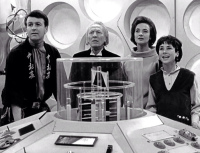 William Hartnell: “Memories? There are so many. There was the occasion when I arrived at an air display in the TARDIS and the kids were convinced I had flown it there! On another occasion I went by limousine to open a local fete. When we got there the children just converged on the car cheering and shouting, their faces all lit up. I knew then just how much the Doctor really meant to them.”
William Russell: “I liked Marco Polo and I think that was extremely well-written, exciting and diverting as well as having a bit of history on the educational side. I was actually behind one of the stories, as we had a lot of contact with Verity and David and we knew they were always on the look out for stories and ideas, so I suggested the idea of doing a serial set in the French Revolution, which, lo and behold, became a reality. The historical stories were always fun, because it gave us the opportunity to dress up and really enter the period. I remember doing The Romans, which was fun, and another about Richard the Lionheart, in which the director wanted me to let my arm get covered in ants – I said ‘Under no circumstances’, and that was that, they had to get a stand-in.”
Jacqueline Hill: “I always preferred the historical stories, because I was given a bit more to do in them. In the science fiction stories, it was the monsters and weird characters who tended to take over, and all the girls tended to have to do was look frightened and get lost in a gloomy passage or two. I adored all the dressing up that went with doing the historical stories, and they were much more colourful for us because the historical sets were so gorgeous to act in. I think I liked The Aztecs, and the one about the Crusaders, best. In The Aztecs I had the most magnificent headdress, which was terribly difficult to balance, but which looked superb and made me feel very regal. The story itself was extremely clever and it was a fascinating period. I suppose I liked it above all the others because that was the one in which Barbara was most important to the storyline. I liked The Crusade for similar reasons, and also because I greatly enjoyed working with Douglas Camfield on that one. The Romans was another which was great fun to do. It had Derek Francis in it. He used to make me laugh all the time and we got the chance to play Doctor Who all out for comedy, which was fun.”
Carole Ann Ford: “The mix of stories was fantastic – the science-fiction ones were great, the historical ones were wonderful. I suppose the historicals came out slightly better. John Lucarotti was a great writer. My favourite story was Planet of Giants. The sets were superb – you almost didn’t need to act!”
William Russell: “With Planet of Giants, they got very ambitious and literally filled the studio with as many of these outsize props as they could fit in, including a giant telephone and a box of matches. The matches themselves were rather dangerous as they were bulky and could bump you on the head if you dislodged them. We used a process called back projection, where we were placed against a giant screen onto which was projected film of this cat trying to turn us into his lunch. That was another fun one which we enjoyed doing.”
Carole Ann Ford: “Mind you, there were ones that I wasn’t so keen on, such as The Edge of Destruction. We went mad for two episodes, and I think that was simply because none of us knew what it was all about – we just didn’t know what we were doing. And not only because it was so quick – it was frankly so weird and whenever we asked why we were behaving in a particular way we were just told to get on with it and say the words!”
With the show developing through that first season into being a huge success for the BBC, what effect did being in the show have on our cast’s lives and why did finally leave the show?
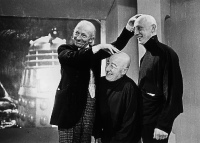 William Russell: “Doing Doctor Who didn’t really affect our lives that much at the time. We all got up early, drove into London and rehearsed and then went home; life went on, and we didn’t have much time to attend fetes, although I did do a few public appearances. I finished the show and then went on to do something else. I think we were all aware that once the series had established itself, it would run for some time, but I don’t think we were ever intending to see it through to the end regardless. Carole was a young actress who, understandably, wanted to do other things, and so we were sad but not especially surprised when she left us. I think Billy felt it the most – he was certainly very annoyed with Jackie and me for throwing the towel in. Jackie and I both came to the same decision at about the same time, and we gave Verity plenty of notice. I think it twas her plan to write us out together, although that was obviously the most logical, neat way to do it. My memory is a little blurry as to how they actually disposed of us, although I do remember being taken all around London’s sights for the closing shots. Actually, Verity and Billy between them tried very hard to keep us on but that was it, we’d done two years. I had to go, because the whole Doctor Who job was turning into a grind, the spark had gone out of it for us, and I wasn’t inspired enough to put all I felt I should do into it.”
Jacqueline Hill: “We decided to leave virtually as a mutual thing. We’d done two years of it, which was a strain and there wasn’t a lot more we could do with it either. Everything that we wanted to do in the series had been accomplished and we felt, and I think Verity sneakingly agreed with us, that it was time for the series to try and see if it could do something new. As for the question of going together, well, it all just seemed to come together at the right time for both of us. I think it had always been felt that Ian and Barbara, who had this slightly romantic side to their relationship, should go together much as they came – back to the London they left. They wrote us out well. They took us all around the centre of London to get some shots of us ‘back home again’, which were later shown in the last episode. For the last live action filmed piece, we went back to, guess where, glamorous Hammersmith!”
Carole Ann Ford: “It was a tiring schedule on the show. We often recorded them as if they were live, without any breaks for nearly twenty-five minutes. The air conditioning wasn’t very good in the studios and we really sweated our heads off and the TARDIS console would keep going wrong because of the heat. I would have been happy to have left earlier. It had become so repetitive. For a large part of the time, Susan was arriving somewhere with her grandfather and the other two, being told not to get into danger, having them come and get her out of danger, then flying off again. In the meantime, I was watching visiting actors do really interesting stuff.”“
William Hartnell: “Doctor Who is certainly a test for any actor. Animals and children are renowned scene-stealers and we had both – plus an assortment of monsters that became popular in their own right. Look at the Daleks. They started in the second serial and were an immediate success. We did Doctor Who for forty-eight weeks a year but I loved it.”
The show of course has a very passionate and loyal fan-base, what were the reactions from fans?
Carole Ann Ford: “It was instant madness, there was nothing like it on television. We could go anywhere in the universe, and we gave them great cliffhangers, it was amazing, like being a pop star. I couldn’t go down the street for a bottle of milk any more!”
William Hartnell: “I couldn’t go out into the street without a bunch of children following me, like the Pied Piper. People used to take it terribly seriously. I’d get letters from boys swotting for exams, asking me complicated questions about time ratios and the TARDIS. I couldn’t help them.”
Jacqueline Hill: “How so many people can still appreciate what we did all those years ago in a tiny black and white studio really astonishes me. I suppose it’s unique.”
William Russell: “I found it curious to have such a passion for something I’d done so many years ago, but I soon discovered the fans are as sane as anyone else. It’s strange to me, because my life has moved on and I’m constantly doing other things. I often find myself at a loss of what to say to people, because they know more about the programme than I do. I’m astonished and very flattered. Even now, people still write to me saying they enjoyed the show very much, and asking for a signed photo. If you think about it, a lot of people are seeing it for the first time and so it has the same effect on them as it did all those years ago. It’s very wonderful to have played a part in that.”
And finally, after paving the way for everything that was to come, what does Doctor Who mean to them, and why has it been such a success?
 Carole Ann Ford: “I must say that when I left Doctor Who, I was filled with… not loathing, but I was incredibly annoyed because I wanted to do more television and films and the only thing that people could ever see me in was a recreation of what I had done. A Susan clone. Some kind of weird teenager. I wanted to do work that would disconnect me from Doctor Who. That is a very difficult thing to accomplish, as many other actors who have played the companions have found out.”
William Russell: “What we started in Doctor Who is not so very surprising when you consider the talent of someone like Verity Lambert, or the impact that Billy made with audiences everywhere. It had a very positive effect for me, really, because it was a very successful programme and I enjoyed doing it very much. Anything that gets your name around can’t be too bad. I’m lucky in my work, because I flip between television, film and theatre, so I don’t, in a sense, capitalise on anything I’ve done on screen.
Jacqueline Hill: “It all goes back to the success of Bill Hartnell as the Doctor, I should imagine, and we always got on well. He would get very annoyed with the way things were done if he thought they were being done the wrong way, but he cared so much about the programme and I think it showed. Looking at the show’s durability now, it’s a quite amazing phenomenon, although it was an excellent idea, particularly for the time. I think he has managed to last so long because it has this ability to change and develop, it’s never the same, so nothing gets too boring or familiar.”
William Hartnell: “It may seem like hindsight now, but I just knew that Doctor Who was going to be an enormous success. Don’t ask me how. Not everybody thought as I did. I was universally scoffed at for my initial faith in the series, but I believed in it. It was magical. We’re all very pleased and honoured that so many people seem to have taken it to their hearts.”


